
- font_admin
- December 2, 2025
- Devanagari ConversionHindi Font ConversionLegacy fontsMarathi Font ConverterShivaji fontUnicode to Shivaji
The Essential Unicode to Shivaji Marathi Hindi Font Converter Tool
In the digital age, much of the world has standardized on Unicode for consistent text display across devices. However, many legacy documents, especially those related to regional administration and historical archives in India, still rely heavily on non-Unicode fonts like Shivaji or Kruti Dev. This disparity creates significant hurdles when migrating content. Fortunately, modern web tools bridge this gap. This post introduces the indispensable Unicode to Shivaji Font Converter, a powerful tool designed to effortlessly transform your contemporary Devanagari text into the classic Shivaji typeface, essential for Marathi and Hindi users.
Understanding the Need for a Unicode to Shivaji Font Converter
Before jumping into the mechanics, it is crucial to understand why this specific conversion is necessary. Unicode fonts (like Mangal or Arial Unicode MS) represent characters based on their meaning, ensuring they look the same everywhere. Legacy fonts like Shivaji are keystroke-based and require specific software installations, often causing display issues outside their native environment. Furthermore, government forms, old publications, and specific printing requirements often mandate the use of the Shivaji font style. This converter is the lifeline for professionals working with bilingual documents.
Why is the Legacy Shivaji Font Still Relevant?
- Archival Compatibility: Preserving the original look of older documents.
- Printing Standards: Many official and traditional printing presses utilize the Shivaji font standard.
- Aesthetic Preference: Some users prefer the distinctive, traditional aesthetic of the Shivaji typeface for literary works.
Transitioning between font standards doesn’t have to be a headache. The right conversion tool automates this complex process, saving countless hours of manual formatting.
Consequently, whether you are a journalist, a government clerk, or an academic researcher, having a reliable mechanism to execute the Unicode to Shivaji Font Converter function is paramount for workflow efficiency.
Step-by-Step Guide: How to Use the Shivaji Font Converter Tool
Using this specific converter is straightforward, designed even for non-technical users. It requires only a few steps to achieve perfect conversion without any data loss. Therefore, follow this simple process:
- Access the Tool: Navigate to the converter website.
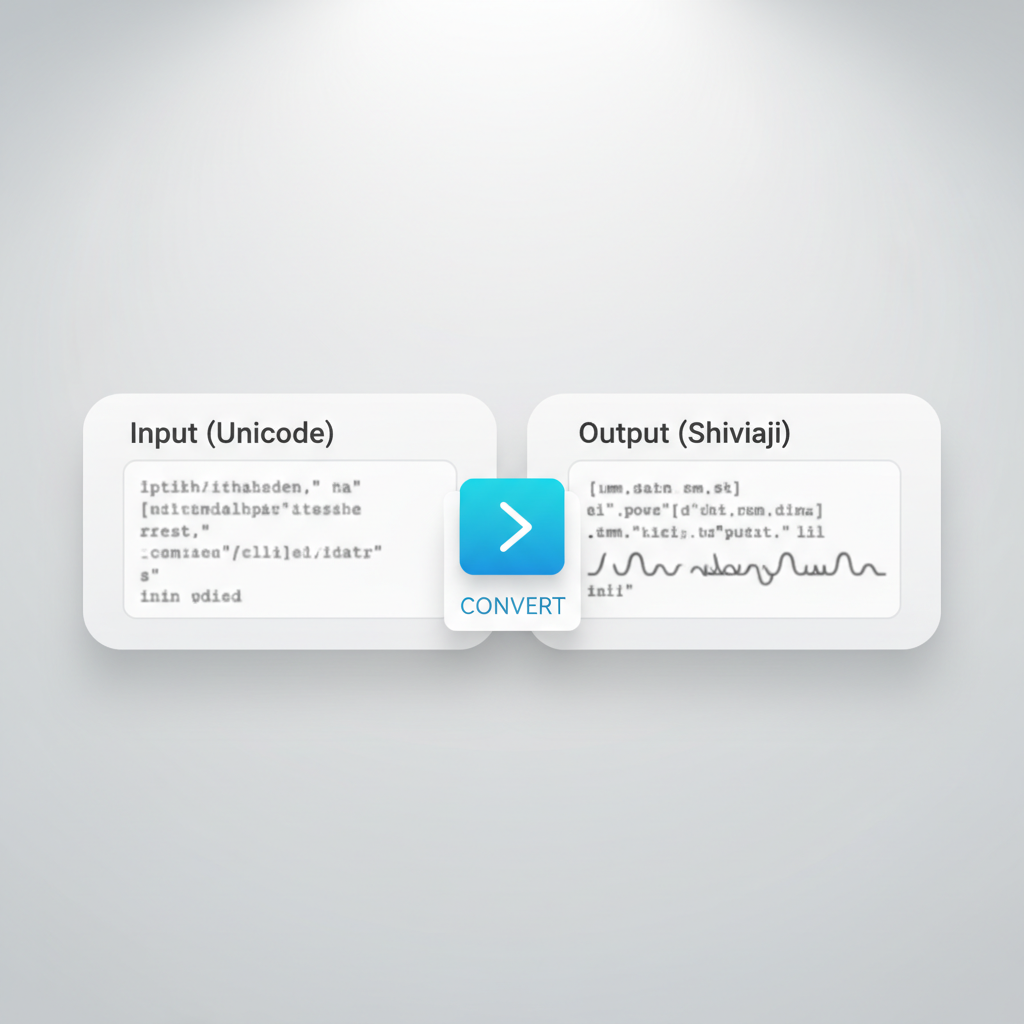
- Paste Unicode Text: Copy your text written in a standard Unicode font (like Mangal or Devanagari) and paste it into the designated input box.
- Select Language (Optional): Verify the source language (Marathi or Hindi), although the tool generally handles the Devanagari script reliably.
- Execute Conversion: Click the “Convert” or “Generate” button. The tool instantly processes the text.
- Copy Output: The resulting text, now in the Shivaji font format, appears in the output box, ready to be copied and pasted into your application of choice.
Key Features of a High-Quality Shivaji Font Converter
Not all converters are created equal. When selecting a tool for your needs, ensure it possesses these critical features. This guarantees accuracy and versatility for handling various documents and lengths.

Ensuring Accurate Script Mapping
The primary challenge in converting between these systems is the difference in character mapping. A high-quality Unicode to Shivaji Font Converter must use robust algorithms to accurately map every Unicode character and combination (including ligatures and conjuncts) to its correct Shivaji keystroke equivalent. Consequently, this prevents garbled or incorrect output that requires time-consuming manual correction. Furthermore, instant conversion speed is essential for high-volume tasks.
- Batch Processing Support: Ability to handle large documents or multiple files simultaneously.
- Error Highlighting: Identification of characters that cannot be accurately converted.
- Cross-Platform Compatibility: Accessible via any modern web browser.
Moreover, maintaining data privacy is crucial, especially when dealing with official or sensitive documents. Reliable converters should process the text locally or use secure connections to ensure the input data is protected.
Beyond Marathi: The Utility for Hindi and Devanagari Conversions
While the Shivaji font is historically most associated with Marathi documentation, the underlying script (Devanagari) is shared with Hindi. Therefore, this specific converter often handles Hindi Unicode text just as effectively, translating it into a Shivaji-style output. This flexibility makes it a valuable resource across multiple language domains that utilize the Devanagari script.
For example, if you have historical legal documents in Hindi that require printing in the specific old typeface, the function of the Unicode to Shivaji Font Converter remains vital. However, users should always perform a quick check after conversion to ensure all Hindi-specific nuances (if any exist in the legacy font) are maintained.
The migration from legacy fonts to Unicode is an ongoing necessity, but the need to return to older formats for specific purposes persists. Tools like the Unicode to Shivaji Font Converter provide the perfect technical bridge, ensuring compatibility, preserving historical aesthetics, and significantly streamlining administrative and publishing workflows. Don’t let font incompatibility slow down your work—leverage this efficient online solution today.