
- font_admin
- November 29, 2025
- Devanagari scriptDVB-TT SurekhIndian Font ConverterLegacy fontsMarathi font conversionUnicode
The Essential Guide to Unicode to DVB TT Surekh Converter
In the complex world of Indian language computing, especially for regional languages like Marathi, converting text from one font standard to another is often a necessary yet frustrating task. This is particularly true when dealing with legacy systems or older publications. Fortunately, specialized tools exist to bridge this gap. This post explores the functionality and benefits of the essential Unicode to DVB TT Surekh converter, a critical utility for professionals and enthusiasts working with Marathi digital documents.
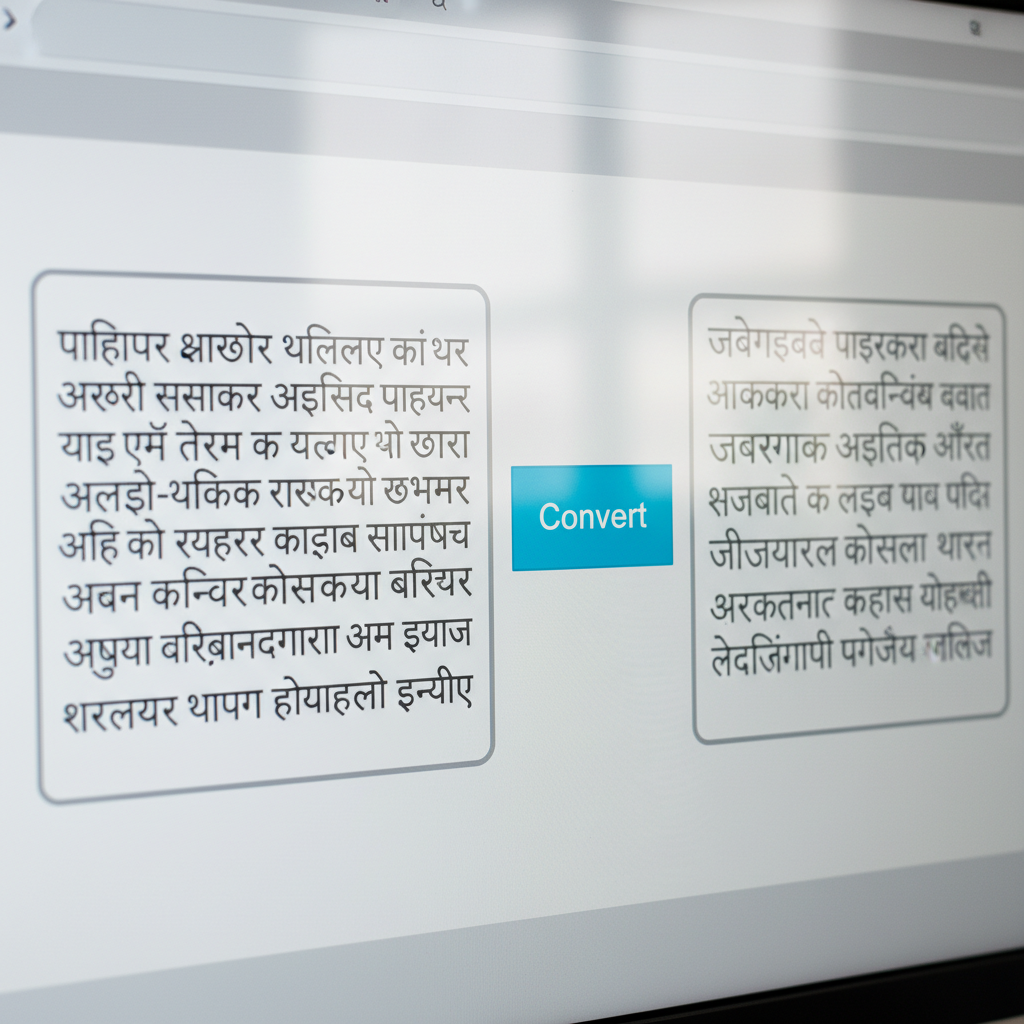
Unicode is the universal standard, ensuring consistent digital display across modern platforms. However, many older Marathi documents rely on proprietary or non-standard fonts, such as DVB TT Surekh. Consequently, if you need to integrate legacy data into modern systems or vice versa, this conversion tool becomes indispensable. Furthermore, using a reliable online converter ensures accuracy and speed, preventing potential formatting disasters.
Understanding Marathi Font Encoding Issues
Before the widespread adoption of Unicode, various typeface standards were created for Indic scripts. DVB TT Surekh is one such typeface, common in Marathi printing and publishing during the late 20th and early 21st centuries. While functional on specific systems, text encoded in these formats often renders as gibberish (mojibake) when opened on standard Unicode-enabled devices.
Why Unicode to DVB TT Surekh Conversion Matters
The need to convert is driven by compatibility. Journalists, government officials, academic researchers, and publishers frequently encounter documents locked in the DVB TT Surekh format. To make this content searchable, editable, and publishable on the web or in modern software, conversion is mandatory. The online Unicode to DVB TT Surekh converter provides a straightforward solution, preserving the original data integrity while updating the encoding.
- Archival Compatibility: Ensuring old files remain readable.
- Web Publishing: Making legacy content accessible to all users globally.
- Editing Efficiency: Allowing text to be modified easily in standard word processors.
- Data Migration: Smoothly transferring data between different database environments.
How the Online Converter Simplifies Unicode to DVB TT Surekh Conversion
The process is designed for simplicity, even for users who are not technically inclined. Most high-quality tools follow a similar, three-step procedure that transforms your text accurately. This simplicity is a hallmark of a robust Unicode to DVB TT Surekh converter.
- Input Phase: Copy the text you wish to convert (which is usually in Unicode format) and paste it into the designated input box on the converter website.
- Processing Phase: Click the ‘Convert’ or ‘Submit’ button. The converter’s algorithm instantaneously maps the Unicode characters to their corresponding DVB TT Surekh representation.
- Output Phase: The converted text appears in the output box. You can then copy this text and paste it into applications that require the DVB TT Surekh font, such as older graphic design software or specific printing programs.
Transitioning between encoding types should be seamless, not a barrier to productivity. A good converter handles the complex character mapping automatically, saving countless hours of manual correction.
Digital Publishing Specialist
The reliability of the conversion often depends on the underlying mapping logic of the tool. Therefore, it is essential to use a dedicated platform like the one referenced below, which specializes in Indic language conversions.
Key Benefits and Application Scenarios
The primary benefit of using a high-quality converter is maintaining data integrity. Many manual processes or subpar tools introduce errors, especially concerning conjunct consonants (jodakshare) specific to the Devanagari script used in Marathi. Accurate conversion ensures the text remains grammatically and semantically correct.
Government and Legal Documents
Many state government files in Maharashtra were digitized using DVB fonts. To standardize these archives for public access or inter-departmental use, conversion is vital. Using the Unicode to DVB TT Surekh converter allows older drafts to be integrated seamlessly into current digital pipelines.
Publishing and Media
Book publishers often require text in specific, non-Unicode layouts for high-quality printing. Converting the universally edited Unicode text into the DVB TT Surekh format ensures that the final print output matches the publisher’s requirements perfectly without introducing rendering issues specific to legacy typesetting software.
Ensure flawless text rendering across all platforms with accurate conversions.
Troubleshooting Common Unicode to DVB TT Surekh Errors
While modern converters are highly reliable, occasional issues can arise. Understanding potential pitfalls can help you troubleshoot effectively. The most common error involves incorrect character mapping, often due to regional dialect variations or unusual character combinations.
- Mismatched Characters: If the output looks slightly off, ensure you selected the correct source encoding. Some tools offer multiple legacy font options; choosing the wrong one will result in garbled text.
- Whitespace Issues: Sometimes, extra spaces or missing spaces appear. This is usually due to how the original DVB TT Surekh text was typed. A quick manual cleanup post-conversion can fix this.
- Zero-Width Joiners (ZWJ): Unicode handles complex ligatures using ZWJ characters. If the resulting DVB TT Surekh text breaks up conjuncts, the converter might not fully support the complex mapping for those specific characters. Reporting this to the tool developers is often the best course of action.
In conclusion, the movement towards standardizing digital text requires robust and specialized tools. The Indian Font Converter‘s utility for the Unicode to DVB TT Surekh converter task stands out as a critical resource for anyone managing Marathi textual data. Utilizing this tool correctly ensures your content is not only preserved but also fully functional in both legacy and modern environments.